Nearly fifty years of surviving radio, restored to the dates it originally aired. You don't search it. You pick a day from 1923 to 1969 — and hear what was actually broadcast.
"A time machine disguised as a radio."
When you're listening to the radio, you're at the right place and the right time — no matter the frequency. Which means almost all of it is gone.
The comedies families gathered around, the cliffhangers kids refused to sleep through, the news bulletins that stopped the whole country mid-dinner. Listening to even a fraction of what humanity has broadcast would take more than a lifetime.
Some of it survived. Transcription discs, home recordings, collectors' tapes — scattered across archives, technically "available" and practically unheard, buried in file listings nobody would ever browse for fun.
So we built it a home. The Lost Radio Station puts almost fifty years of surviving radio back on the air. You don't scroll a database — you pick a day in history and you hear what was actually broadcast on that day.
"These broadcasts were never meant to be archived — they were meant to be kept appointment with. Restoring the appointment restores the magic."
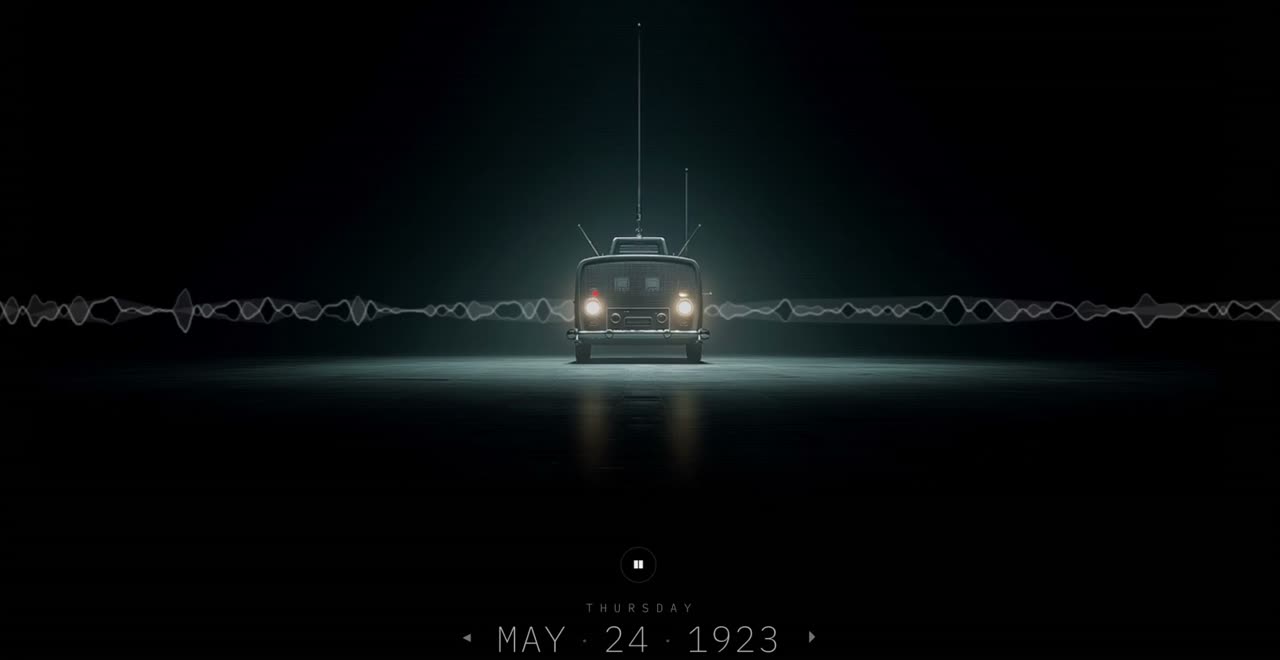
A warm glow, a dial, a date. No feeds, no thumbnails, no algorithm deciding what you should want — just the night and whatever it had for you.
Any day from 1923 to 1969. Turn the dial to October 30, 1938 and you're in the evening Orson Welles convinced America the Martians had landed.
Land anywhere in the 1940s and the war is on the air between the comedy hours. Drift into the fifties and you can hear television slowly stealing the audience, week by week.
Comedy, drama, mystery, westerns, sci-fi, news, quiz shows, soaps and more — restored to the exact dates they originally aired.
Every recording verified public domain or openly licensed. Lost radio, legally found — celebrated, never pirated.
The feeling of sitting down in the living room, turning the knob, and catching whatever the night had — exactly the way the original audience did, with no idea what was coming next.
The shows are wonderful, but the atmosphere is what people stay for — the sense of eavesdropping on another decade, of company arriving from a long way off.
An automated pipeline that combs public archives and rebuilds the station as new material surfaces. The collection grows faster than anyone could ever listen.
Crawls public archives and catalogs millions of recordings — the raw, scattered remains of a century of broadcasting.
Resolves dates, stations, and genres out of decades of inconsistent, contradictory labeling — so every broadcast lands on the day it aired.
Filters everything down to what can be freely and legally redistributed, verifying public-domain or open-license status for every recording.
We built it, and we still listen for hours. The collection grows faster than anyone could ever listen — maybe that's where you come in.